


Last Updated: November 1, 2026
Quick Summary
To host Thanksgiving calmly, plan backward from your serve time and start four weeks out by setting your guest list and ordering the turkey. Build a written hour-by-hour dinner timeline, make what you can ahead, and set the table two days early so the day itself stays easy.
- Add a buffer of two seats to your head count for extra guests.
- Thaw the turkey in the fridge, allowing about a day per four to five pounds.
- Set the table two days ahead while stores are still open.
- Build the menu around one showstopper dish and four to six sides.
- Bake pies one to two days ahead and store them at room temperature.
Table of Contents
- Your Thanksgiving Hosting Checklist: Start Here
- Building a Thanksgiving Dinner Timeline That Actually Works
- Make-Ahead Thanksgiving Dishes That Save the Day
- Thanksgiving Table Setting Ideas for a Warm, Artisan Look
- Plan Your Table and Serve the Feast
- Frequently Asked Questions
Your Thanksgiving Hosting Checklist: Start Here
To host Thanksgiving is to run a large, warm meal on a schedule you set weeks in advance. The hosts who look calm on the day plan backward from the meal.
Below is the exact countdown we would use, plus a dinner timeline, make-ahead dishes, and table ideas.
Step 1: Set your guest list and order the turkey four weeks out. Everything else depends on these two numbers.
Four Weeks Out: Guest List and Turkey Order
Start with a simple head count, then add a buffer of two seats. A few people always bring someone.
- Send invitations early so you get real RSVPs, not maybes.
- Ask about allergies and dietary needs now, not on the day.
- Order your turkey based on guest count, and confirm the pickup date.
One short text asking "anything you can't eat?" solves most dietary questions before they become day-of problems.
Two Weeks Out: Menu and Grocery Plan
Build the Thanksgiving menu around one showstopper dish and four to six sides. More dishes means more oven time, more pans, and more stress.
- Pick recipes you have cooked before.
- Mark which dishes can be made ahead.
- Write one shopping list, sorted by grocery aisle.
A written menu checklist beats a mental list, tape it to the fridge.
The Final Week: Prep, Thaw, and Set the Table
This is where the meal is won. Thaw the turkey in the fridge, allowing roughly a day for every four to five pounds. Chop vegetables, make stock, and bake pies early.
Set the table two days ahead. It is one less task on the day, and it lets you notice what is missing while stores are still open.
Building a Thanksgiving Dinner Timeline That Actually Works
A Thanksgiving dinner timeline is a written hour-by-hour plan built backward from when you want to sit down. Tape it to a cabinet. The version that survives a real kitchen ties clock times to your turkey's weight, your oven count, and your serve time.
Step 2: Work backward from your serve time. If dinner is at 4 p.m., the turkey comes out at 3 p.m. to rest. Build the rest of the day from those two anchors.
Start With the Turkey Math, Not the Clock
The bird drives the schedule, so calculate it first. The USDA Food Safety and Inspection Service is the reference for safe minimum internal temperatures, so check the bird with an instant-read thermometer rather than relying on time alone.
- Serve time: 4 p.m.
- Carve time: 3:30 p.m.
- Turkey out to rest: 3:00 p.m.
Add 30 minutes of buffer to whatever the math says. Ovens run hot or cold, birds vary, and a turkey that finishes early holds under foil far better than one that finishes late.
Mapping Oven Time for Turkey, Sides, and Pies
Most home kitchens have one oven, so oven scheduling matters more than any recipe. Pies bake first, in the morning, while the oven is free. The turkey takes the long block. Sides that reheat well go in during the rest.
Time Block |
Oven Use |
Dish Type |
|---|---|---|
Early morning |
350°F |
Pies, breads |
Late morning to afternoon |
325°F |
Turkey |
During turkey rest |
375°F |
Reheating sides |
Just before serving |
400°F |
Rolls, crisping |
Watch out: opening the oven to check the bird drops the temperature and slows the cook. Use the oven light instead.
When You Only Have One Oven (or a Small Kitchen)
A single oven is the most common constraint when you host Thanksgiving, and it is solvable without buying anything:
- Stagger the temperatures. Roast the turkey at 325°F, then bump to 375°F during the rest for sides. Most reheat dishes tolerate the jump.
- Use the stovetop and slow cooker for the overflow. Mashed potatoes hold in a slow cooker on warm; gravy and cranberry sauce live on a back burner.
- Reheat in batches, not all at once. Two dishes at 375°F for 20 minutes beats five dishes crowding the racks and cooking unevenly.
The Last 90 Minutes
The final stretch is where timelines fall apart, so script it:
Fall Party Supplies - Disposable Dinner Plates & Napkins for 50 Guests →
- 90 minutes out: check the turkey with an instant-read thermometer; confirm sides are thawed or reheated.
- 60 minutes out: start water for anything boiled, set out butter and rolls.
- 30 minutes out: make gravy, carve, and move sides to serving dishes.
A timeline is a tool, not a contract. If the turkey runs 20 minutes long, the rest of the plan shifts with it, which is exactly why you built in buffer at the front.
Make-Ahead Thanksgiving Dishes That Save the Day
Make-ahead Thanksgiving dishes are recipes fully or partly prepared in the days before, then finished or reheated on the day. They are the single biggest stress reducer in holiday hosting, but only if you know how far ahead each dish can safely go and how to bring it back without drying it out.
A Make-Ahead Schedule by Dish
Not every dish tolerates the same lead time. A practical pattern:
- Cranberry sauce: make it a week early; it keeps well and often tastes better after a few days.
- Gravy: make and freeze up to a week early; reheat gently and whisk in a splash of stock.
- Pies: bake one to two days ahead; store at room temperature, not in the fridge, to keep crusts crisp.
The Food-Safety Rules That Actually Matter
The make-ahead plan only works if the food stays safe. The USDA Food Safety and Inspection Service is the reference to check:
- **Keep cold dishes cold and hot dishes hot to stay out of the temperature range where bacteria grow fastest, and check the official FSIS guidance for specific figures.
- Cool before you store. Divide big pots of mashed potatoes or stuffing into shallow containers so they cool quickly in the fridge.
- Label and date everything. A piece of tape with the dish name and date prevents the guessing game on Thursday morning.
Reheating Without Ruining the Dish
Reheating is where make-ahead meals go wrong. A few mechanisms that help:
- Add moisture back. A splash of stock or butter before reheating restores what the fridge pulled out.
- Cover, then uncover. Reheat covered to heat through, then uncover for the last 10 minutes to crisp the top.
- Use the right appliance. The oven is best for casseroles and stuffing; the stovetop is best for gravy and mashed potatoes; the microwave is fine for a single plate but not for a whole dish.
Leftovers: The Plan You Make Before the Meal
Leftover planning starts before the meal, not after. Have containers ready before guests arrive so the cleanup is a 10-minute job instead of an hour. The FDA guidance on safe food handling is a good reference for storing them properly, and the short version is:
- Refrigerate leftovers promptly after serving.
- Use shallow containers so food cools fast.
- Eat refrigerated leftovers within a safe window, or freeze them.
A make-ahead plan plus a leftover plan is what turns a stressful Thursday into a calm one. The dishes do the work; you just have to schedule them.
Thanksgiving Table Setting Ideas for a Warm, Artisan Look
Thanksgiving table setting ideas work best when they lean into texture and warmth rather than perfection. Layer natural materials, mix in handmade pieces, and let the light do the rest.
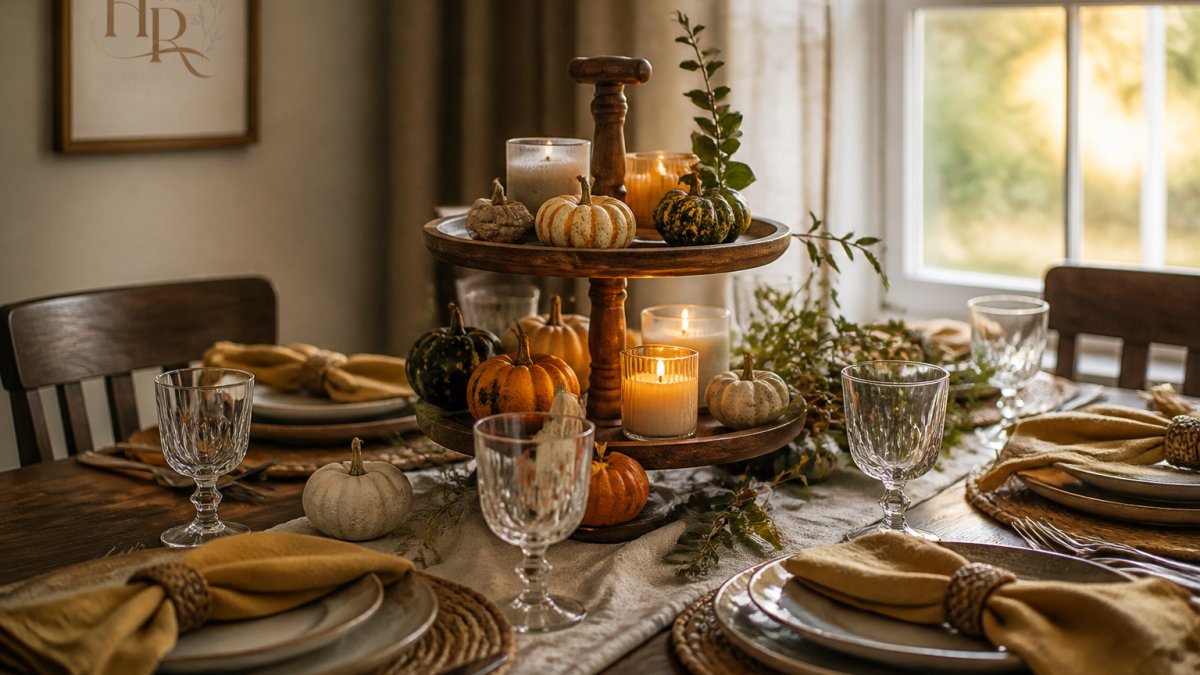
Start with a linen runner, then add height with a wooden tiered tray. Use real leaves or a single branch instead of a big centerpiece.
If you want disposable plates for a crowd, the fall paper plates and napkins set that serves 50 guests keeps the autumn look without a sink full of dishes. For more styling direction, our guide on how to style artisan home decor walks through the layered approach.

Step 3: Build the table in layers. Linens first, then height, then light.
Plan Your Table and Serve the Feast
Serving the feast is easier when the food is grouped, not scattered.
A 3 tier wooden serving tray with tongs lets you stack appetizers or desserts vertically, which saves space on a crowded table.

Cleanup goes faster if you have a plan too. Have containers ready for leftovers before the meal starts.
One more thing worth planning: games or a simple activity for guests who linger.
The best holiday hosting is not about a flawless table. It is about a table where people feel welcome.
Frequently Asked Questions
How do you host Thanksgiving for the first time?
Start with a guest count and a simple menu you can execute, then work backward from dinner time using a written timeline. Order your turkey early, plan which dishes are made ahead, and set the table the night before. Keep the guest list modest for your first year, ask people to bring a side or dessert, and write down your oven schedule so nothing collides. A checklist and a calm plan matter more than a complicated menu.
What can you make ahead for Thanksgiving?
Many dishes hold up well when made a day or two in advance. Cranberry sauce, gravy, stuffing, mashed potatoes, casseroles, and pies all reheat or finish well on the day. Prep raw vegetables and assemble salads the morning of. Make-ahead dishes free up your oven and stove on Thanksgiving Day, so you can focus on the turkey and on greeting guests instead of cooking everything at once.
How much food should you plan per person for Thanksgiving?
Plan roughly one to one and a half pounds of turkey per guest if you want leftovers, and about three to four side dishes per person in total portions. Offer one dessert serving per guest plus a few extra. If guests bring dishes, you can trim your own quantities. Having disposable plates and napkins on hand, like a fall set that serves 50, keeps serving simple and cleanup quick when the crowd is larger than expected.
How do you host Thanksgiving without getting stressed?
Spread the work across weeks instead of days. Build a Thanksgiving hosting checklist, lock your menu early, order the turkey, and cook make-ahead dishes in advance. Delegate sides and desserts to guests, set the table the night before, and keep a written dinner timeline taped to the fridge. Accept help when it is offered, and remember that a warm, welcoming table matters more than a perfect one.


