


Table of Contents
- Start with Your Story: Defining the Narrative of Your Home
- Set a Realistic Budget for Curating a Personal Home
- How to Mix Textures in Interior Design for a Layered Look
- Choosing Artisan Home Decor That Tells a Story
- Luxury Living Room Furniture: Investing in Pieces That Last
- The Psychology of Space: Making Your Home Feel Calm and Personal
- Curating a Personal Home That Grows With You
- Frequently Asked Questions
Last Updated: October 4, 2026
Start with Your Story: Defining the Narrative of Your Home
A home that feels personal starts with a story only you can tell, and the surest way to curate a personal home is to treat that story as the plan.
Interior design psychology researchers note that personal objects do more emotional work than matching furniture sets: a room built around your narrative feels calmer, while one assembled from trends feels borrowed.
Write a One-Sentence Design Mantra
A design mantra is a single sentence stating what your home should make you feel and how it should look. Write it before you buy anything else; it becomes the filter every purchase must pass through.
Good examples read like plain statements of intent:
- "A calm, sunlit space full of handmade wood and quiet color."
- "A warm, eclectic home where every object has a story."
- "A minimalist room with three pieces I truly love."
If a piece of furniture, a textile, or an accessory does not serve that sentence, it does not come home with you.
Set a Realistic Budget for Curating a Personal Home
A budget makes curation sustainable rather than stressful. Decide on a monthly figure you can hold for a year, not a one-time sum spent in a weekend. Slow accumulation is the entire method.
The most common mistake is buying a whole room at once: it empties your wallet and rarely feels personal, because nothing was chosen over time.
The 70-20-10 Rule for Home Decor Spending
Split your decor budget into three buckets and protect the split:
| Bucket | Share | What It Covers | Example Purchase |
|---|---|---|---|
| Foundation | 70% | Long-lasting furniture and textiles | A sofa, a wool rug, linen curtains |
| Character | 20% | Artisan decor and art | A gallery wall set, a hand-thrown vase |
| Discovery | 10% | Small finds and experiments | A wood tray, a decorative object |
The foundation bucket carries pieces you will keep for a decade. The character bucket is where artisan home decor adds texture and story. The discovery bucket lets you try things without guilt.

How to Mix Textures in Interior Design for a Layered Look
Mixing textures is the fastest way to make a room feel finished.
Start with what you already own: a leather sofa, a linen throw, and a wooden side table already give you three.
A few combinations that work in almost any room:
- Wood and wool, warmed by a linen cushion
- Ceramic and glass, grounded by a woven basket
- Velvet and metal, softened by a chunky knit
Scale matters as much as texture. One large textured piece reads calmer than five small ones competing for attention. If a room feels busy, remove two small objects before adding anything new.
Choosing Artisan Home Decor That Tells a Story
Artisan home decor is made by individual makers rather than factories, so each piece carries small variations that mass production removes, a hand-finished surface, an irregular edge, or an uneven glaze is evidence of a person's hand.
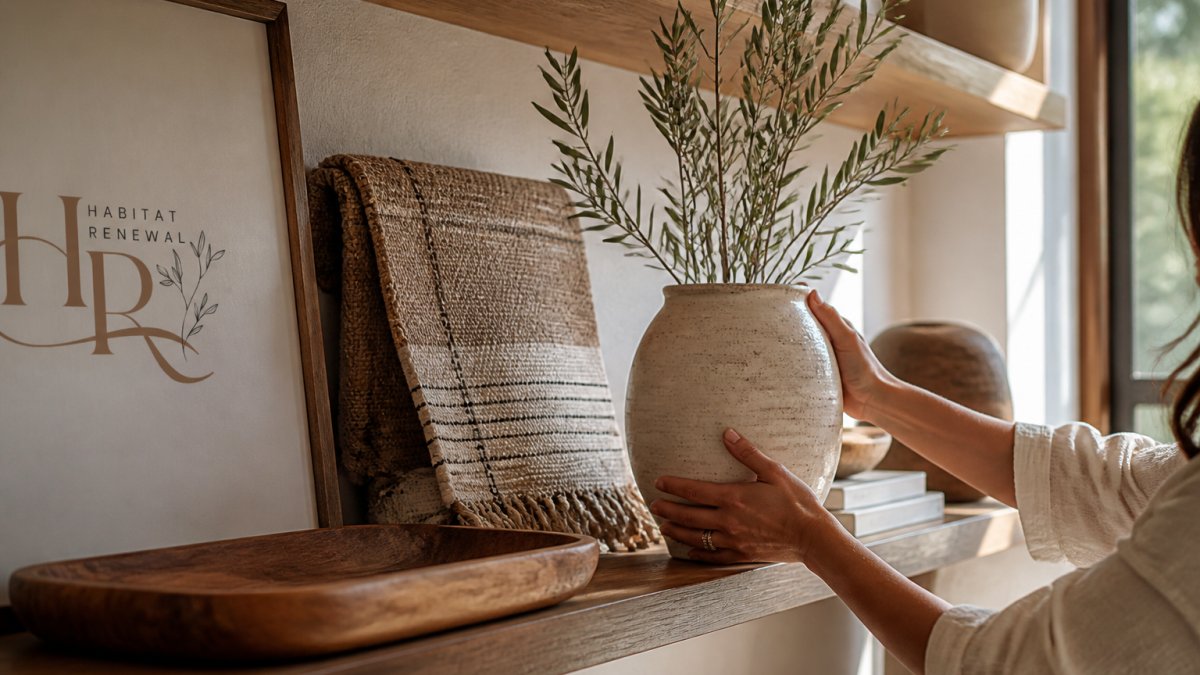
Buy fewer artisan pieces and place them where you actually look every day: the entryway, the coffee table, the shelf beside your chair.
Our Curated Gallery Wall Vintage Art Collection - 3 Piece Set is a good example of how this works in practice.
Smaller artisan accents do the same job at a lower entry point. A Decorative Wood Chain at $14.40 adds an organic, sculptural texture that softens hard architectural lines, and it layers well among books or in a ceramic bowl. A Rustic Wood Tray at $5.00 corrals keys, jewelry, or soap dispensers while adding a warm, distressed wood note to a countertop.


Why Handcrafted Pieces Beat Mass-Produced Decor
Handcrafted pieces hold value in three ways mass-produced decor does not. They are made in smaller runs, so your room will not look like a catalog page. They are repairable, so a scratch becomes patina instead of damage. And they carry a maker's story, which turns a house into a narrative.
Luxury Living Room Furniture: Investing in Pieces That Last
A useful way to think about investment pieces:
Curated Gallery Wall Vintage Art Collection - 3 Piece Set →
- Anchor pieces: the sofa, the main seating, the largest rug. Spend here first.
- Supporting pieces: side tables, consoles, lighting. Buy quality, but you have more room to experiment.
- Accents: trays, boxes, chains, small art. These carry the personal details cheaply.
How to Identify Quality Craftsmanship Before You Buy
Check these five things before any significant furniture purchase:
- Joints are visible and tight, not hidden behind staples or glue blobs
- The frame is solid hardwood, and it does not flex when you press a corner
- Cushions have removable, washable covers and dense, springy fill
That last point matters more than people expect. Makers who stand behind their work sign it.
The Psychology of Space: Making Your Home Feel Calm and Personal
Calm comes from what you remove, not what you add. Rooms feel settled when surfaces are mostly clear, sightlines are open, and every visible object has a reason to be there, the difference between a decorated room and a personal home.
Environmental psychology researchers describe two levers that shape how a room feels: cognitive load and restoration.
Apply the one-in-three-out rule to visible surfaces: for every new object on a counter, shelf, or table, remove three.
The Three-Zone Method for a Calm Room
Divide any room into three zones and treat each one differently:
- Rest zone: the sofa, bed, or chair where you sit still. Keep this zone almost empty of decor. One textile, one light source, one meaningful object is enough. The rest zone is where restoration happens, and clutter here undoes the effect of everything else.
- Transition zone: entryways, hallways, and the path between rooms. This is where you place the pieces you want to see daily, the heirloom, the framed photo, the handmade bowl for keys. Transition zones are seen in motion, so they tolerate more objects without adding load.
- Display zone: shelves, mantels, and gallery walls. This is where collections live. Group in odd numbers, vary height, and leave at least a third of the shelf empty. Empty space is not wasted space; it is what makes the displayed objects readable.
Lighting shapes the same feeling. Two or three low, warm light sources at different heights read calmer than one bright overhead fixture. Add a floor lamp, a table lamp, and a candle, and dim the ceiling light in the evening.
Scent and sound belong here too. A single candle or a diffuser with one consistent scent becomes a cue that the room is for rest, and a soft textile on a hard floor reduces echo.
For smaller homes, spatial planning decides everything. A single handmade box, like our Patisserie Adorn Resin Wood Inlay Decorative Storage Box at $28.00, does double duty: it hides the clutter of remotes, jewelry, or mementos while adding a handmade, patterned accent to a coffee table or shelf.
Curating a Personal Home That Grows With You
A curated home is never finished, and that is a feature rather than a flaw. Rooms should evolve as your life does: new art after a trip, a textile swapped for the season, an heirloom moved from a box to a shelf. The answer is a simple editing rhythm.
The Seasonal Edit: A Four-Step Rotation
Set a recurring date, the first weekend of each season works well, and run the same four steps every time:
- Walk the room and name what you no longer see. Objects that have become invisible to you are the first candidates to move. Invisibility is not failure; it means the piece has done its job in that spot.
- Pull three to five pieces and relocate them. Move a vase from the living room to the bedroom, a textile from the sofa to the bench, a framed print from the hallway to the shelf. Rotation resets your attention without spending money.
- Retire one piece to storage. Not everything stays out forever. A box in a closet is not a graveyard; it is a bench. Pieces that rest come back with new weight.
- Add one thing, or add nothing. The point of the edit is not acquisition. Some seasons the right move is to remove and stop.
This rhythm solves the two most common curation failures: rooms frozen in time, and rooms that churn because nothing is ever allowed to rest.
Maintenance by Material
Care keeps a collection alive rather than merely owned. Different materials need different routines, and getting them wrong ruins good pieces:
- Handmade ceramics: dust with a soft, dry cloth. Avoid abrasive cleaners, which dull glaze and can scratch hand-painted surfaces. Wash by hand if the piece is unglazed or has a matte finish.
- Solid wood: keep out of standing water and away from direct sun, which bleaches and dries the surface. Re-oil or wax every one to three years depending on use. A food-safe oil or a paste wax is enough for most furniture.
- Textiles: rotate throws and cushions so wear is distributed. Wash removable covers according to the fiber, linen and cotton tolerate machine washing on cold, wool usually does not. Store clean, not dirty; moths are attracted to soil and sweat.
Sustainability as a Curation Strategy
Buying fewer, better pieces and repairing them instead of replacing them is the most practical form of circular design available to a homeowner, and it produces the calmest rooms. Three habits make it concrete:
- Repair before replacing. A wobbly chair leg, a loose joint, or a faded cushion cover is usually a small fix, not a replacement. Learning one basic repair skill, re-gluing a joint, re-covering a cushion, re-oiling a surface, extends the life of everything you own.
- Source secondhand first for character pieces. Vintage and estate finds carry the story and patina that new mass-produced decor cannot, and they keep usable objects out of the waste stream. The trade-off is availability: you cannot order a specific vintage piece on demand, so buy when you find it.
- Pass pieces on deliberately. When something no longer serves your home, gift it, sell it, or donate it to someone who will use it. A piece that leaves your home with a story attached is still part of your curation.
When to Let a Piece Go
Not everything should be kept. Release a piece when it no longer passes your one-sentence design mantra, when it is broken beyond reasonable repair, or when it carries a memory you no longer want in the room. Letting go is not a failure of curation; it is the edit that makes the next chapter possible.
Frequently Asked Questions
What are the essential elements of a curated home?
A curated home balances four elements: a clear personal narrative, functional storage, a cohesive color palette, and a mix of textures. Start by defining your style in one sentence, then choose artisan home decor pieces that reflect that story. Add natural materials like wood, linen, and stone to create warmth. Finally, edit regularly: remove anything that does not serve your daily life or your design mantra. This approach keeps your space intentional rather than cluttered.
How do I balance personal collections with a cohesive design?
Group collections by theme, color, or material rather than scattering them. For example, display a set of handmade ceramics together on one shelf, or arrange family heirlooms in a single vignette. Use a consistent color palette across the room to tie different objects together. Limit each surface to three to five items so the eye has room to rest. This way, your personal pieces feel like part of a deliberate gallery wall or tablescape, not random clutter.
What is the 3-5-7 rule in decorating?
The 3-5-7 rule is a guideline for arranging accessories in odd-numbered groups: three, five, or seven items. Odd numbers create visual balance because the eye cannot pair them symmetrically. For example, place three vases of different heights on a console, or five books with a decorative object on a coffee table. Vary heights and textures within each group. This rule helps you style shelves and surfaces without overthinking, and it works well with artisan home decor pieces that have unique shapes.
How can I make my home look classy on a budget?
Focus on fewer, better pieces rather than filling every corner. Set a budget that prioritizes impactful purchases like a well-made accent chair or a large piece of art. Shop for artisan home decor at accessible price points, such as a $74.99 gallery wall set or a $28 decorative storage box, which add character without a luxury price tag. Mix high and low: pair a quality sofa with budget-friendly textiles. Keep surfaces clutter-free and use warm lighting to elevate the overall feel.


