


Table of Contents
- Start with a Design Narrative Before You Buy Anything
- How to Mix Handmade Decor with Modern Furniture
- Artisan Home Decor Styling Tips That Work in Real Rooms
- Choosing Luxury Living Room Furniture That Lets Artisan Pieces Breathe
- Caring for Artisan Materials So They Last
- Sourcing Ethically and Styling on a Budget
- Room-by-Room Guide to Styling Artisan Home Decor
- Conclusion
- Frequently Asked Questions
Last Updated: September 20, 2026
Start with a Design Narrative Before You Buy Anything
Artisan home decor is the practice of furnishing a space with handcrafted, ethically sourced pieces that carry a maker's story, not a factory's output. The best rooms start with a story, not a shopping cart. That's the single biggest mistake I see: people buy beautiful objects one at a time, then wonder why the room feels like a showroom instead of a home.
A design narrative is simply a short statement of what you want the room to feel like and why. Write three sentences before you spend a dollar:
- Name the mood: "calm, warm, unhurried"
- Name the anchor piece: the basket, bowl, or textile everything else supports
- Name the constraint: budget, square footage, or a rental lease
Once that's on paper, every purchase gets easier. You stop asking "is this pretty?" and start asking "does this belong?"
guidance on sustainable home design from the U.S. Environmental Protection Agency
How to Mix Handmade Decor with Modern Furniture
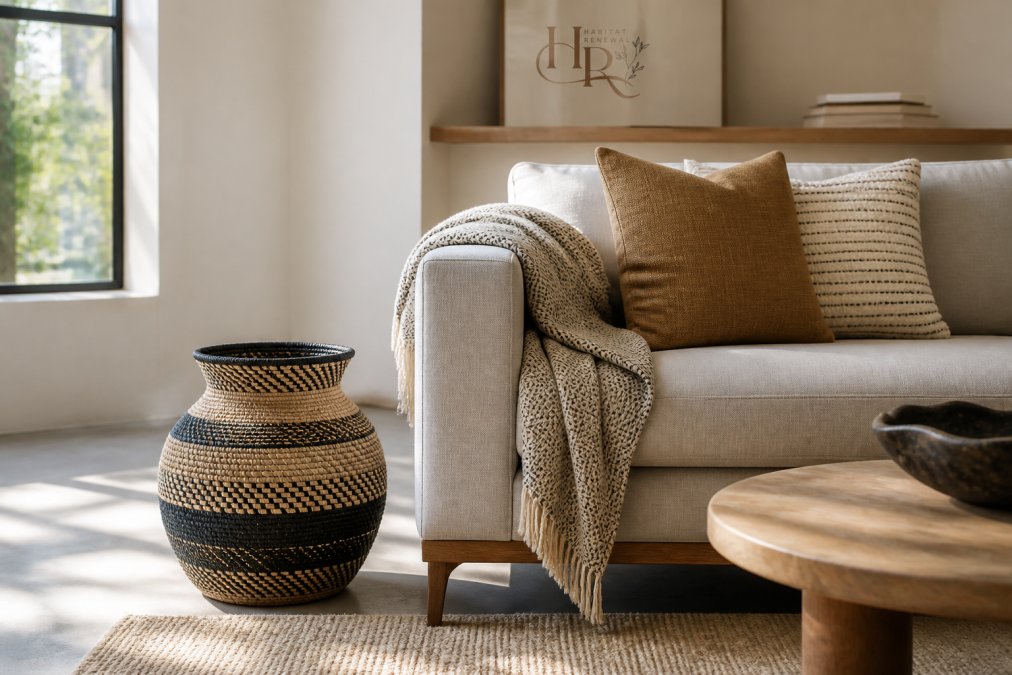
The short answer: let the handmade piece win the eye, and let the modern piece hold the room. Clean-lined furniture makes a handwoven basket or a textured throw look intentional rather than cluttered. Three rules cover most situations.
Balance Scale and Proportion
A large basket beside a low sofa reads as grounding. The same basket beside a tall bookcase disappears. Match visual weight, not literal size. If a piece feels lost, group it with two smaller objects of similar color.
Layer Textures and Natural Fibers
Modern furniture is often smooth: metal, glass, flat-weave upholstery. Add contrast with raw materials. Natural fibers like palm, wool, and linen give the eye something to rest on. One textured piece per surface is usually enough.
Specific pairings that reliably work:
- Glass or chrome coffee table + unglazed ceramic bowl. The matte clay absorbs the shine and stops the table from reading cold.
- Linen sofa + chunky wool throw. Two natural fibers at different scales, fine weave against thick, create depth without pattern.
- Flat-front wood cabinetry + hand-thrown stoneware. In kitchens, a single artisan vessel on an open shelf breaks up the repetition of cabinet doors.
- Boucle or smooth leather chair + woven palm basket. The basket's irregular weave contrasts the chair's uniform surface.
When the Modern Piece Should Win
Not every room needs the handmade piece to dominate. In a small space or a highly architectural room, exposed brick, floor-to-ceiling glass, a single artisan object placed deliberately outperforms a cluster. Let the architecture be the anchor and treat the handmade piece as the punctuation mark. One well-placed object in a strong room reads as confidence; five read as clutter.
Artisan Home Decor Styling Tips That Work in Real Rooms
These are the tips that survive contact with actual living rooms, kids, and pets.
- Style in odd numbers. Three objects of different heights beat two matched ones.
- Leave negative space. Empty surface area makes each piece feel considered.
- Repeat one material twice per room. It creates cohesion without matching sets.
- Rotate seasonally. Store half your pieces and swap them out.
- Skip the matching set. Heritage pieces and modern finds mix better.
Use Lighting to Highlight Artisan Pieces
Place a small lamp or wall light so it grazes the surface of a textured piece. Raking light shows off a weathered finish, a woven pattern, or an organic shape. Overhead light flattens all three.
Choosing Luxury Living Room Furniture That Lets Artisan Pieces Breathe
Luxury living room furniture should be a quiet backdrop. The best pieces have simple silhouettes, low visual noise, and neutral tones that let a handcrafted object take center stage. When you shop, ask one question: will this piece compete with my artisan decor or support it?
Support means:
Malawi Basket with Wooden Handle →
- Solid, simple frames with no busy carving
- Neutral upholstery in earthy tones
- Legs that leave floor visible underneath
Caring for Artisan Materials So They Last
Handcrafted pieces last decades when you treat them like what they are: natural materials, not sealed plastic. Most damage comes from moisture, direct sun, and harsh cleaners. None of those are hard to avoid, but the fix depends on the material, the room, and the season.
| Material | Common Risk | Simple Fix | Frequency |
|---|---|---|---|
| Palm and grass weaves | Drying and cracking | Mist lightly, keep out of direct sun | Monthly |
| Raw wood | Water rings and warping | Wipe dry, oil twice a year | 2x per year |
| Natural fiber textiles | Fading and moth damage | Rotate position, wash cold | Seasonally |
| Unglazed pottery | Staining | Rinse promptly, avoid soap soak | As needed |
| Hand-thrown glazed ceramics | Crazing and thermal shock | Hand wash, avoid dishwasher | Every use |
| Hammered metal | Tarnish and water spots | Dry immediately, polish lightly | Monthly |
Why These Materials Fail
Unglazed pottery is porous by design. That is what makes it beautiful and what makes it stain. Rinse promptly after use and avoid letting acidic foods, tomato, wine, citrus, sit on the surface. A paste of baking soda and water lifts most stains without abrasives.
Room-by-Room Care Notes
- Kitchen: Keep unglazed pottery and raw wood away from the dishwasher and the stove. Steam warps wood and thermal shock cracks clay.
- Bathroom: Woven textiles and unsealed wood do not belong here. If you must, rotate them out weekly and dry them fully before returning.
- Living room: The main risk is sun. Rotate pieces quarterly so one side does not fade faster than the other.
- Bedroom: Dust and moths are the concern. Cedar blocks or lavender sachets in a drawer with wool textiles prevent moth damage without chemicals.
Seasonal Maintenance Calendar
A simple rhythm keeps handmade pieces in good shape without much effort:
- Spring: Deep-clean woven pieces, air textiles outside in indirect sun, inspect wood for cracks.
- Summer: Rotate pieces away from direct sun, watch for humidity damage in woven goods.
- Fall: Oil wood before heating season dries the air, bring in any outdoor artisan pieces.
- Winter: Mist woven pieces monthly, keep them away from heating vents and radiators.
Repair Before You Replace
One advantage of artisan pieces over mass-produced decor: they can usually be repaired. A cracked basket weave can be re-woven by a local craftsperson. A scratched wood bowl can be sanded and re-oiled. A loose textile seam can be mended. Before discarding a damaged piece, check whether a local repair shop or the original maker offers restoration, the cost is often a fraction of replacement, and the piece keeps its story.
Sourcing Ethically and Styling on a Budget
You don't need a designer budget. You need to buy less and buy better. Ethical sourcing and affordability are not opposites, and the two goals often point to the same habit: buy fewer, more meaningful pieces.
How to check a maker's story:
- Does the listing name the artisan, workshop, or region?
- Does the brand explain how makers are paid?
- Can you trace the raw materials to a place?
Room-by-Room Guide to Styling Artisan Home Decor
Different rooms call for different moves. Here's the short version.
Conclusion
The hard part isn't finding artisan home decor. It's trusting your own eye enough to stop adding. If you want pieces with a named maker and a real story, Habitat Renewal curates globally and locally sourced artisan decor, ships free on orders over $100, and shows you the provenance behind every item. Get started with Habitat Renewal and build a room that feels calm, warm, and genuinely yours.
Frequently Asked Questions
What are the characteristics of artisan home decor?
Artisan home decor is defined by hand-crafted construction, natural materials, and visible signs of the maker's hand. Look for tactile textures, organic shapes, and a weathered finish that mass-produced items rarely achieve. Pieces often carry a provenance story, such as the Tonga Basket woven in Zimbabwe from wild grasses and palm leaves, and they tend to use sustainable materials like mulaza palm or natural fibers. The result is a curated aesthetic with warmth and personality that factory-made decor cannot replicate.
How do you mix artisan pieces with modern furniture?
Start with a neutral modern base, then add two or three artisan pieces that share a common thread, such as earthy tones or natural fibers. For example, pair a sleek sofa with a handcrafted Malawi Basket with Wooden Handle for storage and a textured throw. Keep sightlines clear and let each piece breathe. The contrast between clean lines and tactile textures creates visual interest without clutter, and the mix feels intentional rather than random.
How can I incorporate handmade textiles into my living room?
Layer handmade textiles on furniture and floors: a woven throw on a chair, a hand-loomed rug under a coffee table, or a basket as a planter. Choose natural fibers like cotton, wool, or palm, and repeat one or two colors to tie the room together. In a living room with luxury living room furniture, a single artisan textile can soften the look and add warmth. Swap textiles seasonally to refresh the space without buying new furniture.
How do I care for artisan materials so they last?
Proper care preserves the weathered finish and extends the life of your artisan home decor for years.


