


Table of Contents
- Why Handcrafted Textiles Belong in a Modern Home
- Natural Fibers and Sustainable Materials to Look For
- How to Style Throw Pillows in Modern Living Rooms
- Best Fabrics for Rental Apartment Decor
- Artisan Textiles We Love: A Curated Selection
- Textile Care and Longevity: Making Handcrafted Pieces Last
- Budget-Friendly Artisan Integration
- Conclusion
- Frequently Asked Questions
Last Updated: September 18, 2026
Why Handcrafted Textiles Belong in a Modern Home
Handcrafted textiles are fabrics made by individual artisans using traditional techniques like hand-looming, block-printing, and natural dyeing, rather than factory production lines. This guide from Habitat Renewal explores how they fit into contemporary spaces, what to look for, and how to care for them.
The Difference Between Handmade and Mass-Produced
Mass-produced textiles prioritize speed and consistency; handcrafted textiles prioritize skill and character. The difference shows in slightly uneven weave patterns, natural color variation between dye lots, and the weight of the fabric.
Natural Fibers and Sustainable Materials to Look For
Natural fibers like cotton, linen, and wool form the foundation of most artisan textiles. Each behaves differently, and knowing which does what saves you from buying the wrong piece for the wrong room.
Cotton, Linen, and Wool: What Each Fiber Does Best
Cotton is breathable, easy to wash, and holds up to daily use, the most forgiving fiber for high-traffic rooms.
| Fiber | Best For | Care Level | Feel |
|---|---|---|---|
| Cotton | Pillows, throws, everyday use | Easy, machine washable | Soft, breathable |
| Linen | Curtains, pillow covers | Moderate, cold wash | Textured, softens over time |
| Wool | Throws, rugs, winter layers | Gentle, hand wash or dry clean | Warm, dense |
How to Style Throw Pillows in Modern Living Rooms
The fastest way to finish a modern living room is to layer throw pillows in odd numbers, mixing sizes and textures. Three to five pillows in two or three complementary fabrics reads as intentional; a full set of identical pillows reads as a showroom.
Texture Psychology: Why Weave and Fiber Change a Room's Mood
Most styling guides stop at "mix textures," but not all textures produce the same feeling. Weave structure and fiber surface change how a room reads before anyone notices the pattern.
- Smooth, tight weaves (sateen cotton, fine linen). Low surface variation reads as calm and formal, a good base layer for a composed room.
- Nubby, slubby handloom cotton. Irregular yarn thickness catches light unevenly, reading as warm and lived-in, making a minimalist room feel human instead of staged.
- Looped or knotted pile (Turkish cotton, wool). Deep texture absorbs sound and softens hard edges in rooms with glass, metal, or bare floors. One wool or heavy Turkish throw can do more for a cavernous open-plan space than three decorative pillows.
- Embroidered or appliquéd surfaces. Raised detail invites touch and slows the eye, making hand-embroidered lumbar covers a strong focal accent on a plain sofa.
Pillow Size, Scale, and Layering Rules
- Odd numbers work better. Three or five pillows look styled; four looks accidental.
- Mix at least two textures. Pair a smooth linen with a nubby handwoven cotton.
- Keep one color thread. Pull one shade from your rug or art and repeat it across pillows.
- Leave breathing room. Pillows should not cover more than two-thirds of the sofa seat.
- Rotate seasonally. Swap a lightweight cotton cover for a heavier throw in cooler months.
Matching Weave to Room Function
The same pillow that works in a bedroom can feel wrong in a living room, because the rooms are used at different energy levels.
- Living rooms and entryways: favor mid-weight handloom cotton and block-printed covers. They hold their shape against daily sitting and read clearly from across the room.
- Bedrooms: favor linen and lighter cotton. Softer surfaces signal rest, and linen's natural wrinkle is a feature in a low-light room.
- Reading nooks and media corners: favor wool or heavy Turkish cotton. The weight and texture dampen echo and make a small corner feel enclosed.
Best Fabrics for Rental Apartment Decor
For renters, the best fabrics are durable, packable, and reversible, they improve a space without altering it. Pillow covers, throws, and curtain panels all qualify because they move with you and leave no marks.

Durable, Packable, and Landlord-Friendly Choices
- Pillow covers store flat and fit in a single bin during a move.
- Turkish cotton throws fold small, wash easily, and double as bedspreads or beach blankets.
- Light-filtering curtain panels hang from a standard rod and add softness without drilling.
- Lumbar covers add shape to a rental sofa without replacing it.
Artisan Textiles We Love: A Curated Selection
The pieces below come from workshops in Laos, Turkey, and India, each using techniques passed down through generations. Every one is a pillow cover or throw, so they work in any room and travel well.

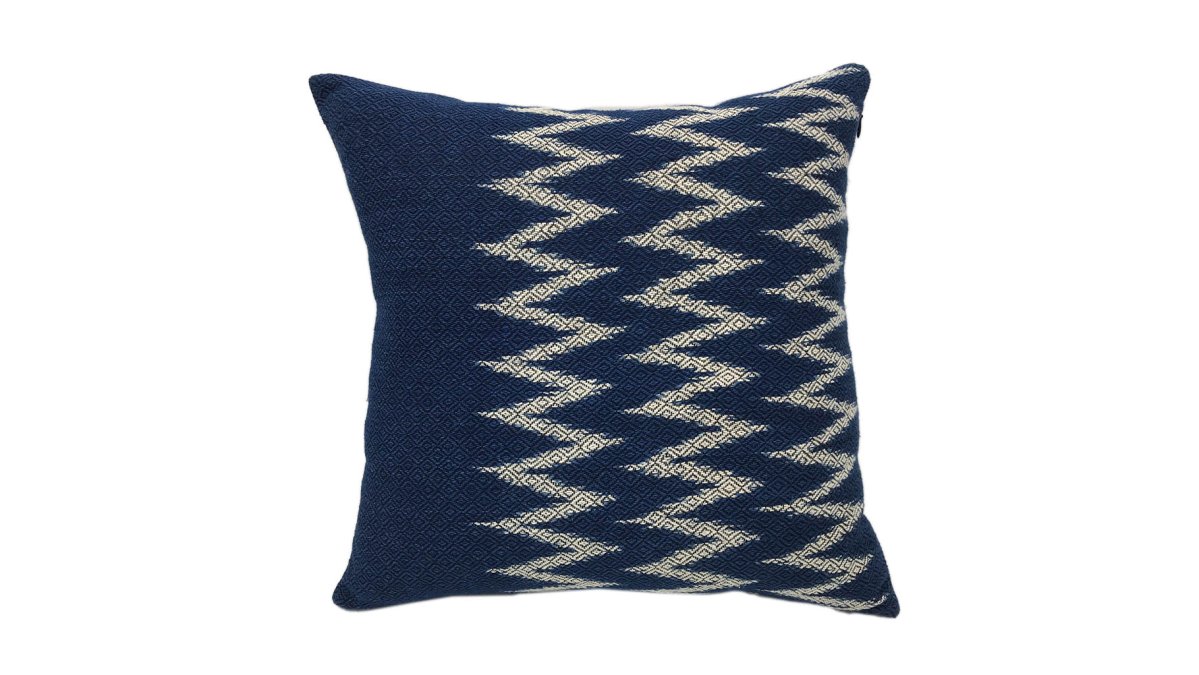
Indigo Pillows from Laos: Hand-Dyed, Handwoven
Real indigo dyeing is a slow, generational skill. The cotton in these covers is planted by hand, watered by monsoon rains, picked, ginned, and spun by hand before it reaches a loom. The Indigo Ikat Pillow Cover and the Indigo Chevron Pillow Cover are both 16 by 16 inches, handwoven and indigo-dyed cotton with a cotton lining and zippered closure.

Turkish Throws and Block-Printed Accents
Turkish cotton has been hand-loomed for centuries, and the Woven Stripe Turkish Throw shows why: 98 by 79 inches, heavier and larger than a standard Turkish throw, with hand-knotted fringe and a 100% Turkish cotton build. The Diamond Stripe Turkish Throw offers the same construction in a diamond pattern at 88 by 69 inches. Both machine wash cold and hang or tumble dry low.
Textile Care and Longevity: Making Handcrafted Pieces Last
Handcrafted textiles last for decades when you wash them as the maker intended: cold water, mild detergent, no bleach. Most damage comes from heat, harsh chemicals, and direct sunlight, not regular use.
A few rules cover almost every piece:
- Wash cold, separately, on a delicate cycle. Hot water shrinks natural fibers and fades natural dyes.
- Skip bleach and fabric softener. Both break down cotton and linen fibers over time.
- Keep out of direct sunlight. Indigo and other natural dyes fade faster than synthetic ones.
- Spot clean by dabbing, not rubbing. Rubbing spreads the stain and distorts the weave.
- Cut loose loops, don't pull them. A pulled thread in a Turkish throw will not unravel if you trim it.
Fiber-by-Fiber Care Reference
Generic care advice fails because cotton, linen, and wool respond differently to the same treatment. Use this as a starting point, then defer to the care label.
| Fiber | Wash Temperature | Detergent | Drying | Watch For |
|---|---|---|---|---|
| Cotton (handloom, block-printed) | Cold, delicate cycle | Mild, dye-free | Hang or tumble low | Shrinkage in first wash; dye bleed on indigo |
| Linen | Cold, gentle cycle | Mild liquid | Hang; smooth by hand | Creasing if wrung; fiber weakening from bleach |
| Wool | Cold, hand wash or wool cycle | Wool-safe, pH-neutral | Lay flat to dry | Felting from agitation; stretching when wet |
| Turkish cotton | Cold, machine wash | Mild | Tumble low or hang | Fringe tangling; over-drying stiffens the weave |
Stain Protocols by Type
Act within the first few minutes when possible. The longer a stain sits, the more it bonds to natural dye sites in the fiber.
- Red wine or coffee on cotton or linen: blot with a clean white cloth, then flush from the back of the fabric with cold water. Avoid rubbing, which drives pigment into the weave.
- Oil or food grease on wool or Turkish cotton: sprinkle cornstarch or talc on the spot, let it sit 15 to 30 minutes to draw out the oil, then brush off and follow with a wool-safe spot cleaner.
- Ink on block-printed cotton: dab with isopropyl alcohol on a cotton swab, working from the outside of the stain inward. Test on a hidden seam first, because alcohol can lift natural dye.
- Indigo transfer onto light upholstery: treat as a dye stain, not a dirt stain. Cold water and mild detergent, blotted repeatedly. Do not use oxygen bleach, which can shift indigo to green.
Storing Handcrafted Textiles Between Seasons
How you store a piece matters as much as how you wash it. Moths, moisture, and compression cause more long-term loss than any single wash cycle.
- Clean before storing. Food and body oils attract pests even when invisible.
- Fold, don't hang, heavy pieces. Wool throws and Turkish cotton blankets stretch out of shape on hangers.
- Use cotton or linen storage bags, not plastic. Plastic traps moisture and can cause mildew and dye migration.
- Add cedar or lavender. Both deter moths without the chemical residue of mothballs, which can leave a permanent odor in natural fibers.
- Rotate the fold lines. Refold wool and heavy cotton every few months so creases do not become permanent weak points in the weave.
When to Repair vs. When to Retire
Handcrafted textiles are often worth repairing in ways mass-produced pieces are not. A loose fringe on a Turkish throw can be re-knotted by hand; a small hole in a handwoven cotton cover can be darned with matching thread and will disappear into the irregular weave. Retire a piece when the base weave has thinned across a large area, natural dye has faded unevenly, or a repair would stress already-weakened yarn.
Budget-Friendly Artisan Integration
Habitat Renewal offers free shipping on orders over $100, which makes it easier to start with a single piece and add as your space evolves.
Conclusion
Building a home that feels personal takes time, and the pressure to finish quickly pushes people toward disposable decor. Handcrafted textiles offer a slower path, where each piece carries the story of the hands that made it.
Frequently Asked Questions
What makes handcrafted textiles a sustainable choice for home decor?
Handcrafted textiles often use natural fibers like cotton, linen, and wool that are biodegradable and breathable. Many artisan pieces are made with traditional techniques such as hand-looming and block-printing, which use less energy than factory production. Natural indigo dye, for example, contains no chemicals or toxic metals. Choosing handcrafted textiles also supports fair trade practices and helps preserve heritage techniques that might otherwise disappear.
How do I style throw pillows in modern living rooms without making them look cluttered?
Start with a limited color palette of two to three tones and mix textures rather than patterns. Use a 16x16 inch pillow like the Indigo Ikat as a base, then layer a lumbar shape in front for contrast. Odd numbers work best, so try three or five pillows per seating area. Keep larger pillows at the back and smaller ones toward the front to create depth.
Are handcrafted textiles durable enough for high-traffic rental spaces?
Yes, when you choose the right fibers. Tightly woven Turkish cotton throws and hand-loomed cotton pillow covers hold up well with regular use. Look for pieces with hidden zippers and cotton linings for added structure. Machine washable options like the Woven Stripe Turkish Throw can be cleaned easily. Rotate and spot-clean your textiles to extend their life in busy areas.
What are the best fabrics for rental apartment decor?
Lightweight, durable, and packable fabrics work best. Cotton and linen are breathable and easy to clean, while Turkish cotton offers absorbency and quick drying. Block-printed linen curtains filter light without blocking it, which helps rentals feel brighter. Avoid heavy upholstery fabrics that are hard to move or clean. Removable pillow covers and throws let you change the look without permanent changes.
How can I incorporate global artisan textiles into a modern interior?
Choose one or two statement pieces and let them anchor the room. A hand-dyed indigo pillow from Laos or a block-printed throw from India adds cultural story without overwhelming a neutral space. Pair artisan textiles with clean-lined furniture so the craftsmanship stands out. Layering a hand-loomed lumbar cover over a solid sofa creates visual interest while keeping the overall look calm and curated.


