


Last Updated: November 21, 2026
Quick Summary
A Thanksgiving dinner is a shared meal built around a roast turkey and classic supporting dishes, planned so everything reaches the table hot at the same time. Plan the schedule first, since the meal is a scheduling problem disguised as a cooking problem, and use a checklist plus make-ahead prep to keep the day calm.
- Dry brine the turkey uncovered in the fridge a day or two ahead for seasoned meat and crisp skin.
- Thanksgiving dinner date falls on the fourth Thursday of November, which is November 26 in 2026.
- Thaw a frozen turkey in the refrigerator, allowing roughly a day for every four to five pounds.
- Cook the turkey until a thermometer in the thickest part of the thigh reads 165°F, then rest it twenty minutes.
- Plan about one pound of turkey per guest if you want leftovers, and refrigerate leftovers within two hours.
Table of Contents
- Building a Traditional Thanksgiving Dinner Menu
- Thanksgiving Dinner Ideas for Sides, Salads, and Sweets
- Your Traditional Thanksgiving Dinner Menu Checklist
- When Is Thanksgiving Dinner Date and How to Time the Meal
- A Coordinated Cooking Timeline and Make-Ahead Prep Plan
- Thawing, Temperatures, and Food Safety Rules to Follow
- Portion Planning, Dietary Swaps, and Budget Shopping
- Setting a Thanksgiving Table with Artisan Serving Pieces
- Frequently Asked Questions
Building a Traditional Thanksgiving Dinner Menu
A Thanksgiving dinner is a shared meal built around a roast turkey and a set of classic supporting dishes, planned so everything reaches the table hot at the same time. The meal itself is only half the pleasure. The other half is the table it lands on.
The most useful thing we can tell you is this: a Thanksgiving meal is a scheduling problem disguised as a cooking problem. Most hosts who end up exhausted made a beautiful menu and never mapped the oven. Fix the schedule first and the menu gets easier.
The Main Course: Roast Turkey and Non-Turkey Options
Roast turkey anchors the traditional Thanksgiving dinner menu, and a dry-brined bird is the most forgiving route for a first-time host. Dry brining means salting the turkey uncovered in the fridge a day or two ahead.
A common mistake is stuffing the cavity. It slows cooking and makes the bird uneven. Cook your stuffing in a separate dish instead.
Not everyone at the table eats turkey, and that is fine. When the turkey comes out, give it a proper landing spot on a serving platter sized for a whole bird.
Stuffing, Gravy, and the Sauces That Tie It Together
Stuffing and gravy are where a good Thanksgiving dinner is won or lost. Sausage stuffing baked in a buttered dish gives you crisp edges and a soft center, and it can be assembled the night before. Gravy is simpler than people fear: pour the pan drippings into a saucepan, whisk in flour, and add stock gradually until it coats a spoon.
Make one batch of gravy ahead using stock, then finish it with drippings on the day. Cranberry sauce takes ten minutes from a bag of fresh berries, sugar, and orange zest, and it keeps for a week.
Thanksgiving Dinner Ideas for Sides, Salads, and Sweets
Thanksgiving dinner ideas for sides should balance richness with something bright. Mashed potatoes and green bean casserole carry the comfort, while a sharp apple and celery salad cuts through the butter. Macaroni and cheese and warm dinner rolls round out the plate for anyone who wants a second helping of something familiar.
For the sweets course, a baking cookbook earns its place on the counter in November. Pies, cakes, and cookies are the classic finish.
Build your sides list around what you can make ahead. Roasted vegetables reheat well. Salads should be dressed at the table.
Your Traditional Thanksgiving Dinner Menu Checklist
A traditional Thanksgiving dinner menu checklist keeps a big meal from becoming a pile of sticky notes. Write it once, use it every year, and adjust as you learn what your table actually eats.
- Turkey ordered or purchased, sized to guest count
- Dry brine started two days out
- Stuffing bread cubed and dried
- Stock made or bought for gravy
- Potatoes, onions, celery, and carrots on hand
- Cranberries and citrus for sauce
- Butter, cream, and flour checked
- Pie crusts made or purchased
- Serving platters and utensils counted
- Table linens and centerpiece ready
The checklist is not bureaucracy. It is the difference between a calm Wednesday and a panicked Thursday morning.
When Is Thanksgiving Dinner Date and How to Time the Meal
Thanksgiving dinner date falls on the fourth Thursday of November each year. In 2026 that lands on November 26. The date moves annually, so confirm it before you send invitations.
Timing the meal matters as much as the date. Aim to serve in the early afternoon, which leaves the evening for pie and conversation. Work backward from your serving time:
- Three days out: shop for non-perishables
- Two days out: start the dry brine, cube the stuffing bread
- One day out: make pies, cranberry sauce, and stock; set the table
- Morning of: turkey in the oven, sides prepped in stages
- One hour before: reheat sides, make gravy, carve
A common mistake is trying to cook everything in the final hour. Spread the work and the day feels like hosting, not surviving.
A Coordinated Cooking Timeline and Make-Ahead Prep Plan
A coordinated cooking timeline turns Thanksgiving dinner from a sprint into a sequence. A weekly meal planner notepad helps organize prep tasks and shopping. The trick is deciding which dishes can be finished early and which must be hot from the oven. Most sides reheat without harm; the turkey and the gravy are the only true last-minute items.
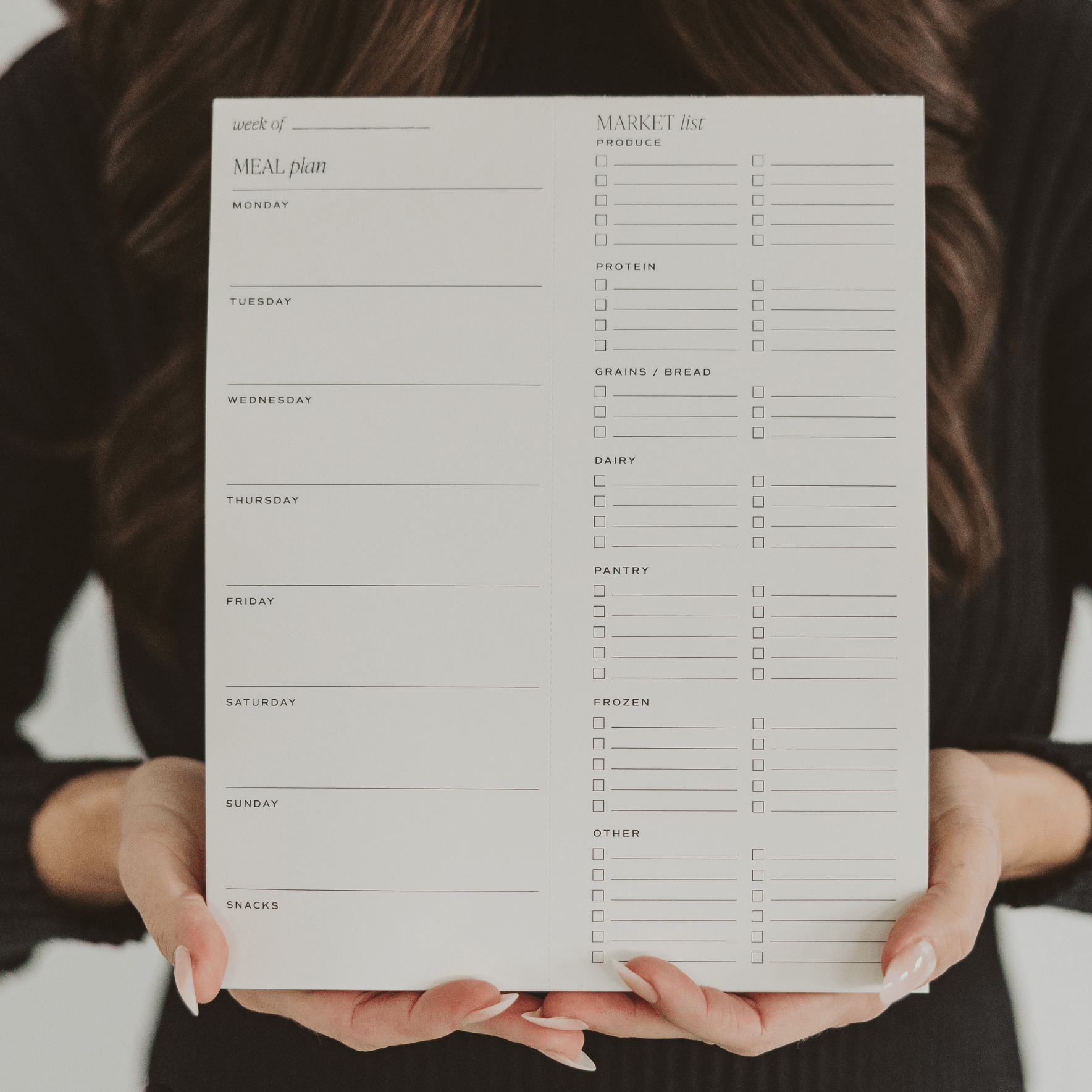
Weekly Meal Planner Notepad
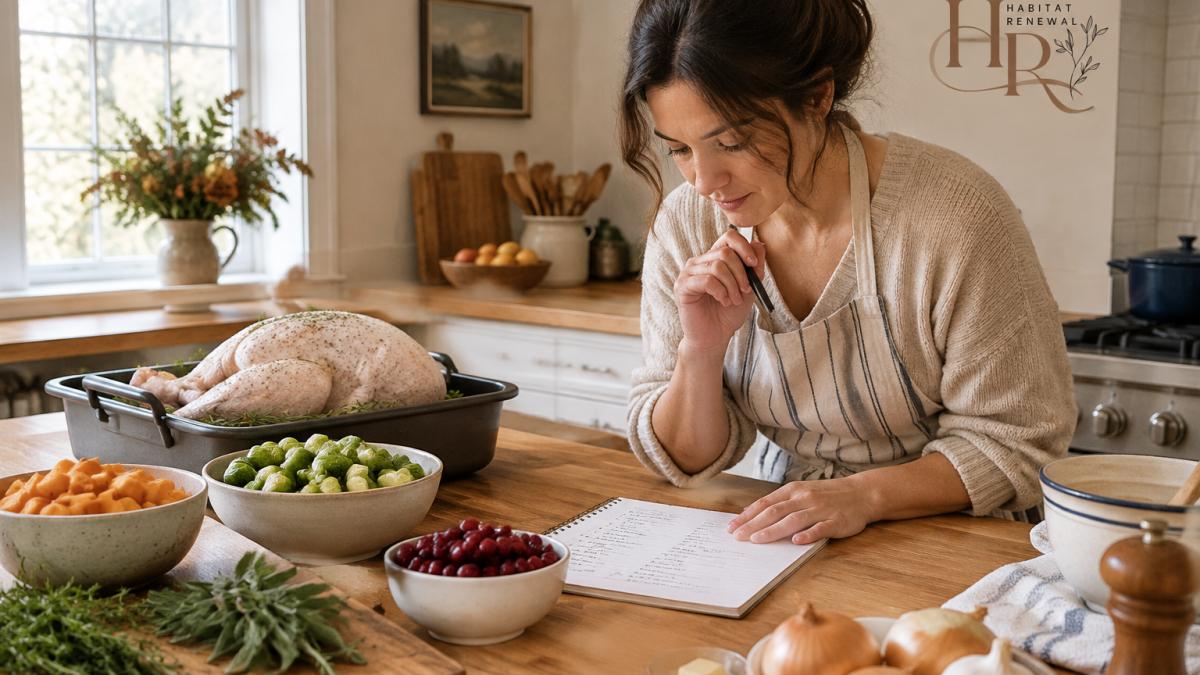
Infographic timeline detailing a step-by-step preparation plan for a home-cooked holiday meal with prepped ingredients
Here is the make-ahead order we recommend:
- Make stock and freeze it
- Bake pies and cool completely
- Assemble stuffing in its baking dish, unbaked
- Blanch and refrigerate vegetables
- Set the table the night before
- Dry brine the turkey two days ahead
That leaves Thanksgiving morning for the bird, the mashed potatoes, and the gravy. Manageable.
Thawing, Temperatures, and Food Safety Rules to Follow
Food safety guidance from the USDA Food Safety and Inspection Service is the standard to follow for turkey.
Cook the turkey until a food thermometer inserted in the thickest part of the thigh reads 165°F. Check the stuffing too if you cook it separately.
Watch out: leaving a turkey out to thaw overnight is the single most common holiday mistake, and it puts the whole meal at risk. Plan the thaw days ahead.
Cross-contamination is the quieter risk.
Storage and leftovers extend the safety plan past the meal. Refrigerate leftovers within two hours of serving, in shallow containers so they cool quickly.
A simple leftover plan keeps the food safe and the week easier: carve remaining turkey into portions the night of, label containers with the date, and freeze half immediately if you know you won't finish it within four days. Stuffing and gravy are best eaten within the first two days; turkey and roasted vegetables hold a day or two longer.
Portion Planning, Dietary Swaps, and Budget Shopping
Portion planning is where hosts overspend and over-cook. A reliable rule is about one pound of turkey per guest if you want leftovers, and roughly three to four side servings per person across the whole spread. For a table of eight, one large bird plus four or five sides is plenty.
A guest-count calculator is more useful than a rule of thumb because it forces you to commit to numbers before you shop. Work from these working figures, then adjust for your crowd:
- Turkey: 1 to 1.5 pounds per guest for a bone-in bird; 1 pound per guest if you want generous leftovers. A 12-pound bird feeds about 8 with leftovers; a 20-pound bird feeds 12 to 14.
- Stuffing: about 3/4 cup per guest, or one 9-by-13-inch dish per 8 to 10 people.
- Mashed potatoes: 1/2 to 3/4 pound of raw potatoes per guest.
- Green bean casserole: one 9-by-13-inch pan per 10 guests.
- Cranberry sauce: 1/4 cup per guest; one 12-ounce bag of fresh berries makes about 2 cups.
- Pie: one 9-inch pie serves 8; plan two pies for a table of 10 so guests can take a sliver of each.
- Rolls: two per guest, plus a few extra.
Dietary swaps deserve a place on the menu, not an apology. Offer a vegetarian main, keep a gluten-free stuffing option, and label dishes with common allergens. Guests notice the effort. Practical adaptations that hold up at the table:
- Vegetarian main: a mushroom and lentil roast, a stuffed squash, or a savory bread pudding gives non-turkey eaters a centerpiece rather than a plate of sides.
- Gluten-free stuffing: use gluten-free bread cubes and gluten-free stock; check that sausage and seasonings are gluten-free.
- Dairy-free mashed potatoes: olive oil and reserved potato cooking water replace butter and cream without a texture penalty.
- Nut allergies: keep candied pecans and walnut toppings in separate bowls, not baked into the stuffing or salad.
- Gravy for everyone: make a base batch with stock and thicken with cornstarch so it is naturally gluten-free, then finish a portion with drippings for the turkey eaters.
Budget shopping starts with the checklist, organized by store aisle so you shop once and don't backtrack:
- Produce: potatoes, onions, celery, carrots, cranberries, citrus, salad greens, apples.
- Dairy and refrigerated: butter, cream, milk, eggs, cheese for macaroni and cheese.
- Bakery: bread for stuffing and rolls, pie crusts if you are not making them.
- Pantry: flour, cornstarch, stock, canned green beans, fried onions, sugar, spices, canned pumpkin.
- Frozen: turkey if you are buying frozen, plus any frozen vegetables.
Buy pantry staples early, watch for sales on turkey and butter, and resist the urge to add a sixth side nobody asked for. A smaller, well-executed menu beats a crowded one every time.
Setting a Thanksgiving Table with Artisan Serving Pieces
A Thanksgiving table is a stage, and the serving pieces do the scene-setting. This is the part of the meal guests photograph, so it deserves the same care as the cooking.
A fall-toned cheesecloth table runner drapes loosely down the center and softens the whole setting. A five-arm candelabra anchors the middle and gives the table height. Warm candlelight, like the Gather Together Soy Candle in its olive matte jar, fills the room with apple, orange, and spice before anyone sits down.

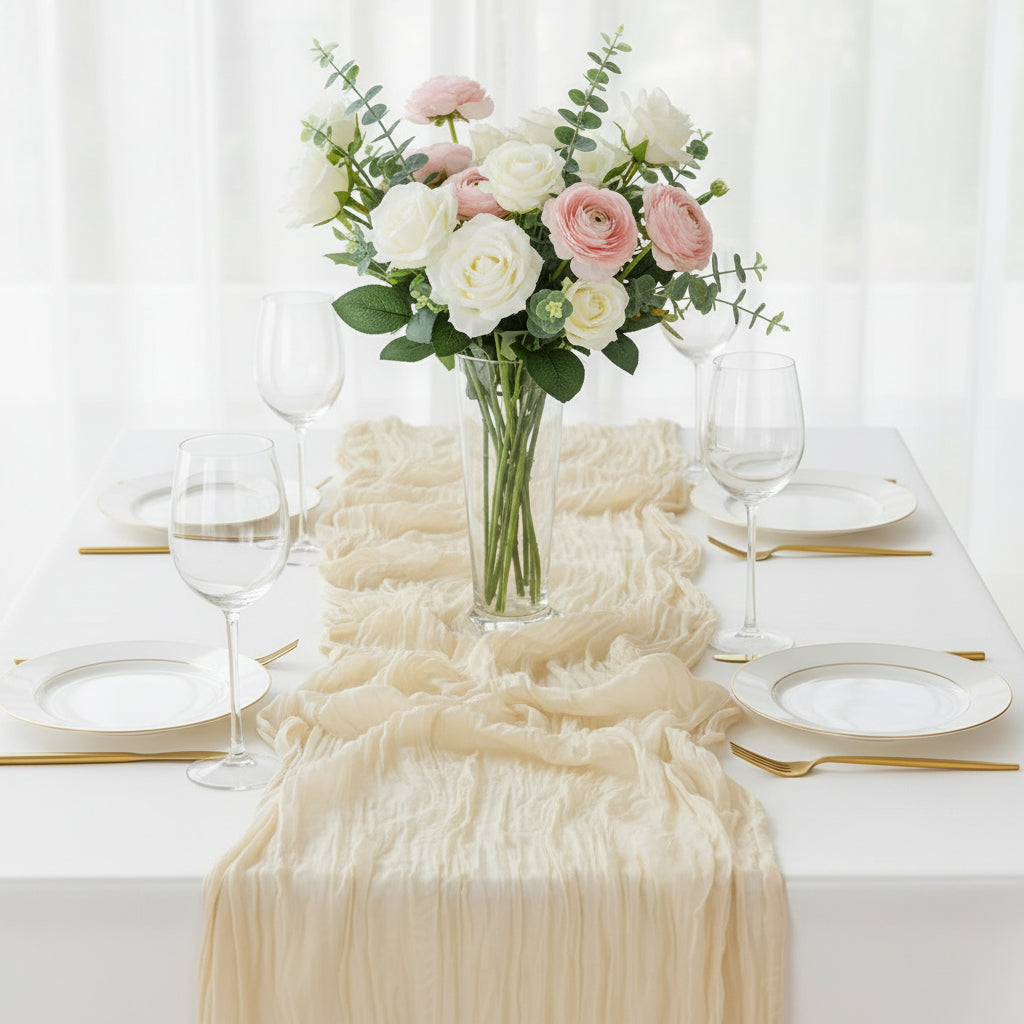
Watch out: don't overcrowd the table. Leave room for platters to land and for elbows to move.
A Thanksgiving dinner that everyone remembers rarely comes from a single showstopper dish. It comes from a plan that holds together, a table that feels warm, and a host who gets to sit down.
Get started with Habitat Renewal and build a table your guests will talk about long after the pie is gone.
Frequently Asked Questions
What is a traditional Thanksgiving dinner menu?
A traditional Thanksgiving dinner menu centers on a roast turkey with stuffing or dressing, gravy, mashed potatoes, and a green bean casserole. Cranberry sauce, dinner rolls, and at least one vegetable or salad round out the table. Pumpkin and pecan pies finish the meal. Most families keep the same core dishes each year and add one or two new recipes, which is why a written checklist helps you repeat what worked and drop what did not.
How much food do you need per person for Thanksgiving dinner?
Plan on about 1 to 1.5 pounds of turkey per guest if you want leftovers, or roughly 3/4 pound per person without them. Figure on 1/2 cup each of stuffing, potatoes, and vegetables per adult, and one to two slices of pie. Appetizers should be light since the main meal is heavy. If you are hosting a smaller group, cook a turkey breast instead of a whole bird and scale sides to match.
What can I make ahead for Thanksgiving dinner?
Stuffing, mashed potatoes, gravy, cranberry sauce, and most pies can be made one to two days ahead and reheated on the day. Prep raw vegetables, cube bread for stuffing, and mix casseroles the night before. Keep make-ahead dishes in shallow containers so they cool quickly in the fridge. On Thanksgiving morning, focus only on the turkey, reheating, and assembling anything that must be fresh, which keeps the kitchen calm.
What time is Thanksgiving dinner usually served?
Most households sit down between 2 and 4 p.m., which lets guests travel in the morning and still eat before evening. An earlier meal around 1 p.m. leaves the afternoon for dessert and cleanup. If you serve later, plan appetizers so no one is hungry while the turkey rests. Whatever time you choose, work backward from it when building your cooking timeline and tell guests the exact serving time.


