


Last Updated: November 22, 2026
Quick Summary
A calm home starts with an honest audit of what drains your space, then decluttering one zone at a time. Give every kept item a clear home, use soft neutral colors and natural light, and work room by room in short sessions to make a calm home that lasts.
- Walk each room and note the three things that catch your eye first.
- Declutter one zone at a time by pulling everything out and sorting it.
- Give every kept item a designated home so tidying takes minutes.
- Keep only nightly items on the bedroom nightstand and move the rest into a drawer.
- Spend 10 minutes each evening returning items to their homes to prevent clutter from returning.
Table of Contents
- Start With a Calm Home Audit: What Drains Your Space
- How to Declutter Your Home One Zone at a Time
- Calming Home Decor: Colors, Light and Texture That Settle a Room
- Room-by-Room Plan With Realistic Time Estimates
- How to Create a Calm Home for Kids Without Killing the Fun
- Peaceful Home Habits That Keep Calm From Slipping Back
- Booking Your First Calm-Home Upgrade at Habitat Renewal
- Frequently Asked Questions
Start With a Calm Home Audit: What Drains Your Space
Creating a calm home starts with honesty about what currently makes it feel chaotic. A home that feels settled, not busy, starts with seeing your space clearly. Most people walk past the same clutter for months without noticing how much it adds to their stress.
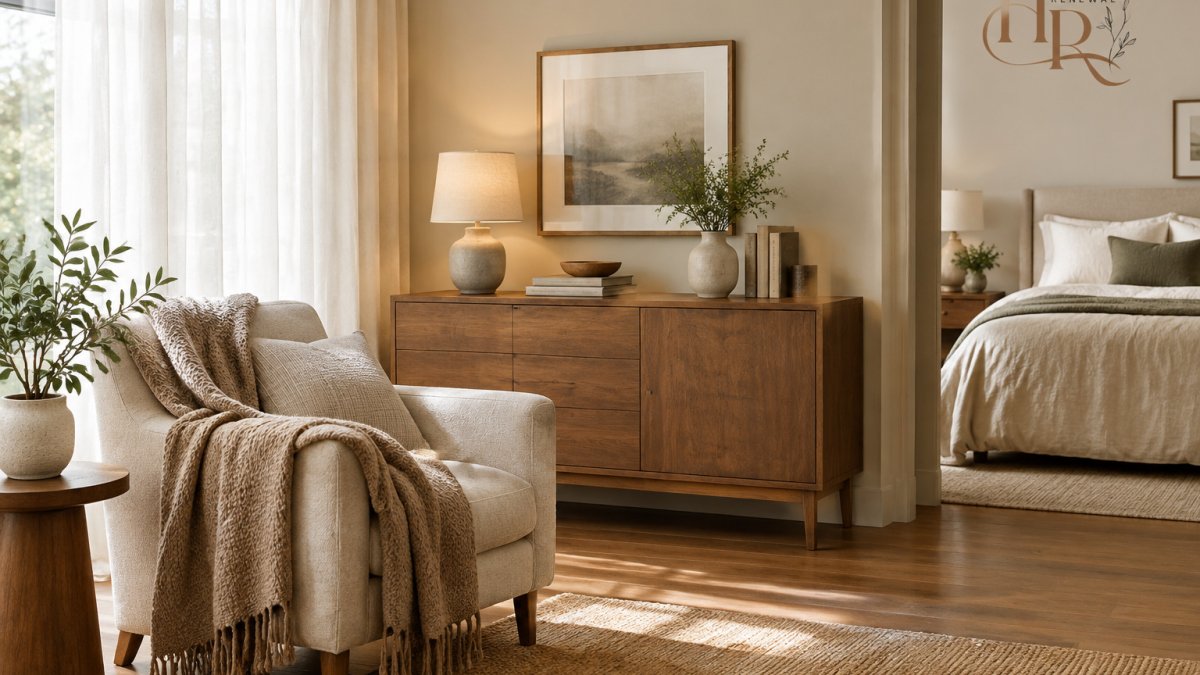
Try this audit before you buy anything. Walk through each room and note the three things that catch your eye first.
- Visible clutter on surfaces like counters, tables, and floors
- Harsh or uneven lighting that makes the room feel cold
- Furniture that blocks easy movement or looks mismatched
- Noise sources, such as a loud appliance or a constant TV
Watch out: Don't start by buying new decor to fix a messy room. Decor added on top of clutter makes the clutter harder to see but no less draining.
Write down what you find. This list becomes your roadmap for the rest of this plan.
How to Declutter Your Home One Zone at a Time
Decluttering is the foundation of a calm home. Most experts recommend working one zone at a time instead of tackling the whole house at once, since big projects often stall. A single drawer or shelf is a win you can finish in one sitting.
Follow this simple process for each zone:
- Pull everything out of the space.
- Sort items into keep, donate, and toss piles.
- Give every kept item a clear home.
- Put back only what you use or love.
Designated storage matters as much as removing things. When each object has a spot, tidying takes minutes instead of hours. A simple daily routine, like returning items to their homes before bed, keeps order from slipping back.
Calming Home Decor: Colors, Light and Texture That Settle a Room
Once a space is clear, decor choices shape how calm it feels. Soft, neutral color palettes and lighter walls help a room feel open and restful. Natural light does the same work, so position seating to take advantage of daylight whenever you can.
Texture adds warmth without adding visual noise.
Lighting sets the mood after dark. Bringing in plants or other natural elements adds life and softness, too.
Room-by-Room Plan With Realistic Time Estimates
A calm home comes together one room at a time, and the plan below is built for short sessions rather than marathon weekends. Most people can complete a single room in two to four focused sessions of 30 to 60 minutes each. If you only have 15 minutes a day, stretch each room across a week and stop at the end of a session, partial progress still counts.
Work in this order: the room you unwind in first, the room you wake up in second, then the spaces that collect clutter fastest. That sequence gives you a calm zone to retreat to while the rest of the house is still in progress.
Living Room (about 2 to 3 hours total)
Start with surfaces: clear the coffee table, side tables, and any shelf tops down to one or two intentional objects. Then anchor the room with a comfortable brown faux leather three-seater sofa positioned to face natural light. Next, check the floor path, can you walk from the door to the sofa without stepping around anything? Move or remove furniture that blocks the path.
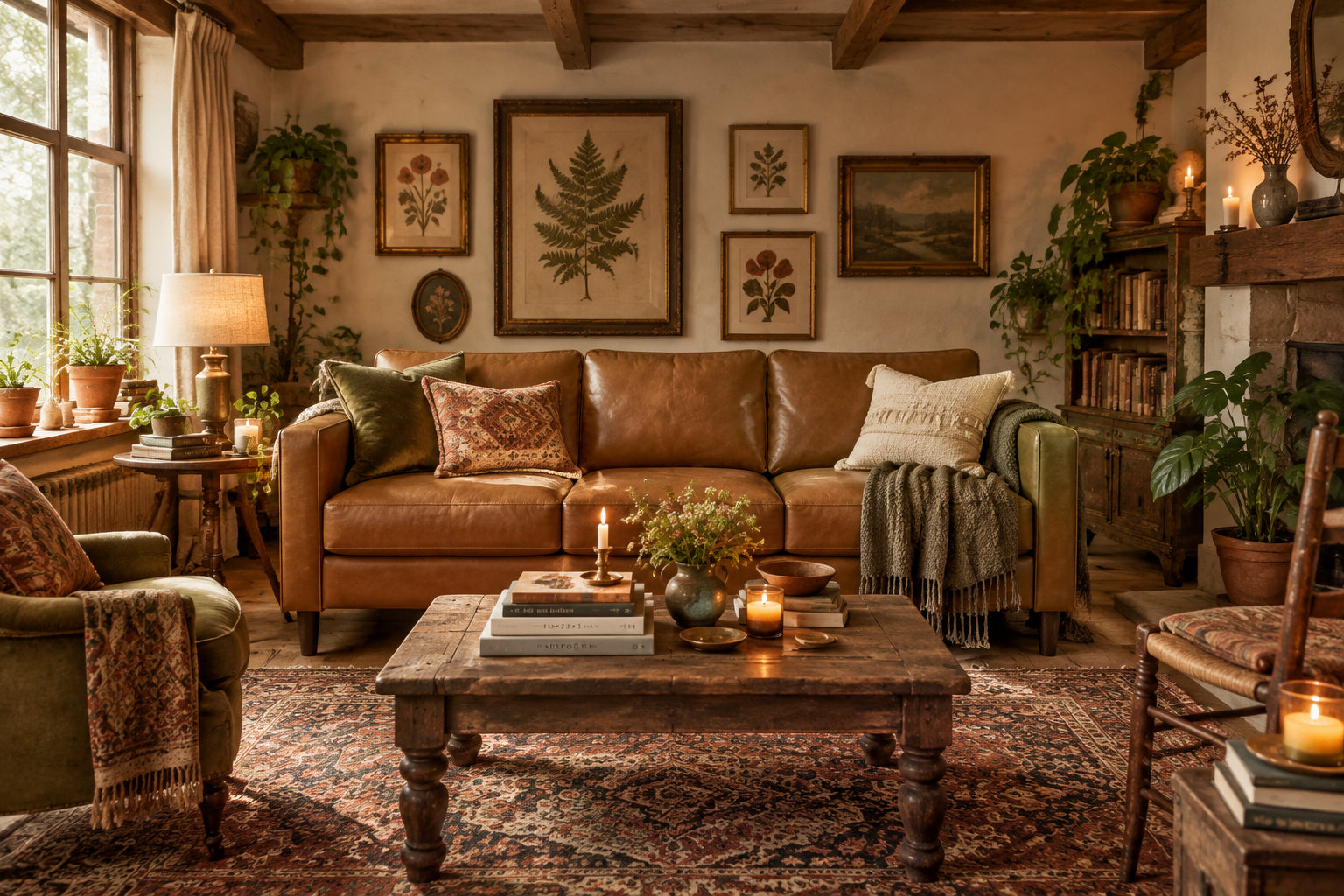
Renters: use removable adhesive hooks and freestanding shelves instead of wall-mounted storage, and choose furniture that fits through the door and can move with you. Budget option: a single washable throw and two pillows in a soft neutral can reset the feel of a room for well under $100.
Bedroom (about 1.5 to 2 hours total)
The bedroom is where light control matters most. Plan about 45 minutes for curtains and another 30 to 45 minutes for clearing nightstands and dresser tops. Keep only what you use nightly on the nightstand, a lamp, a book, a glass of water, and move everything else into a drawer.
Small-space note: if the bed dominates the room, choose one or two calming pieces rather than many small ones. A single textured pillow and a soft blanket read calmer than a cluster of tiny decor items.
Kitchen and Entryway (about 1 to 2 hours each)
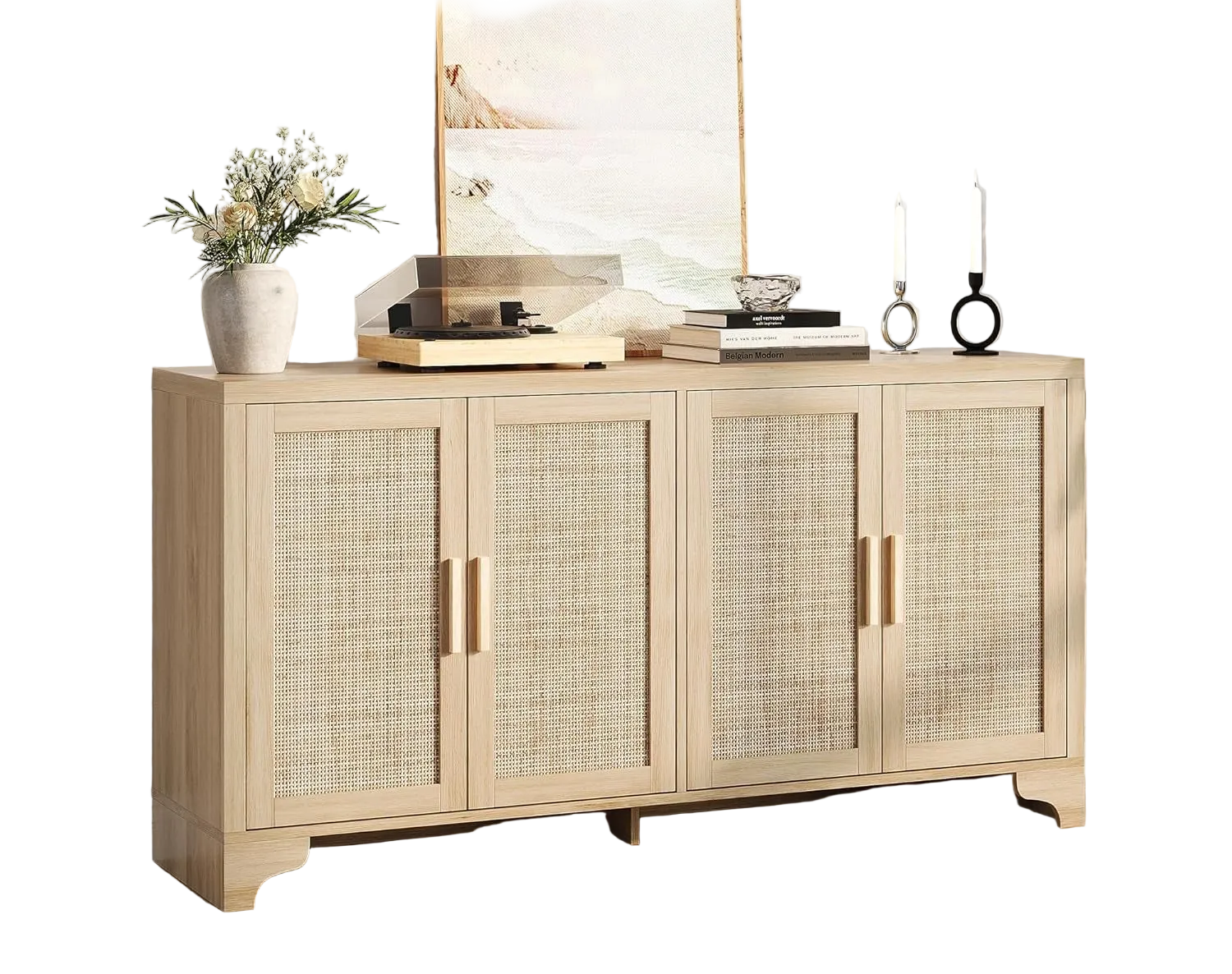
These two spaces collect clutter fastest, so give them storage first. The Natural Rattan Four Door Sideboard Cabinet Engineered Wood can serve as a TV console, entryway cabinet, or kitchen pantry, with four compartments for storage. Set aside one afternoon per space. In the kitchen, clear the counter to one appliance and one bowl or tray; everything else goes into a cabinet or drawer. In the entryway, designate one hook, one tray, and one bin per person, keys, mail, shoes, and nothing else lives there.
Bathroom and Small Spaces (about 30 to 45 minutes each)
Small spaces need the same care as large ones, just compressed. Clear the vanity to daily-use items only, corral the rest in a lidded bin, and add one soft element, a textured towel or a small plant, to break up hard surfaces. If you rent and cannot change fixtures, a tension rod and a fabric shower curtain can soften the room without any permanent change.
A note on budget and effort
You do not need to buy anything to complete most of this plan. The decluttering, path-clearing, and surface-resetting steps cost nothing but time. When you do buy, prioritize one well-made anchor piece per room over several small items, and check return policies before ordering furniture you cannot see in person.
Watch out: Do not schedule more than one room per day if you are also working or caring for others. Overloaded plans stall, and a stalled plan usually means the clutter returns before the first room is finished.
The plan below gives a rough time budget for each room, drawn from the sections above.
| Room | Estimated time | Starting step |
|---|---|---|
| Living room | About 2 to 3 hours | Clear surfaces to one or two objects |
| Bedroom | About 1.5 to 2 hours | Keep only nightly items on the nightstand |
| Kitchen | About 1 to 2 hours | Clear counter to one appliance and one bowl |
| Entryway | About 1 to 2 hours | Designate one hook, one tray, one bin per person |
| Bathroom and small spaces | About 30 to 45 minutes | Clear vanity to daily-use items only |
| Each room, typical pace | Two to four sessions of 30 to 60 minutes | Work in short focused sessions |
How to Create a Calm Home for Kids Without Killing the Fun
Children bring energy and toys, and a calm home still works for them. Give each child a defined play zone and a labeled bin for toys. This keeps play contained and makes evening tidying a simple routine instead of a battle.
Keep the calm-home rules simple and consistent. Let kids help return items to their bins, and praise the effort. A calm home is one where everyone knows where things go, not one where nothing is ever out.
Peaceful Home Habits That Keep Calm From Slipping Back
A calm home needs maintenance, and the most useful maintenance is a short, repeatable system rather than a long list of chores. The goal is to catch drift before it becomes a project.
The 10-minute evening reset
Set a timer for ten minutes before bed and clear surfaces in the rooms you use most: kitchen counter, coffee table, entryway tray. Return items to their designated homes rather than moving them to a "later" pile. Ten minutes is enough for most households; if it is not, your storage system is the problem, not your discipline.
The weekly 20-minute walkthrough
Once a week, walk the same path you used for your initial audit and check three things: Are surfaces still clear? Is anything accumulating in a spot without a home? Is any storage zone overflowing? Overflow is the earliest signal that a category of items has outgrown its space, and it is easier to fix in week two than in month six.
A simple before-and-after check
You can measure whether your changes are working without any tools. Before you start, rate each room from 1 to 5 on three questions: How easy is it to find what I need? How quickly can I clear this room before guests arrive? How settled does this room feel when I walk in? Repeat the same three ratings after two weeks and again after a month. If a room's ratings are not moving, the fix is usually storage or a routine, not more decor.
Relapse-proofing
Relapse usually follows a predictable pattern: a busy week, a pile that has no home, and then a decision to "deal with it later." Break the pattern at the pile stage. Keep one designated catch-all bin per floor, empty it weekly, and never let it become permanent storage.
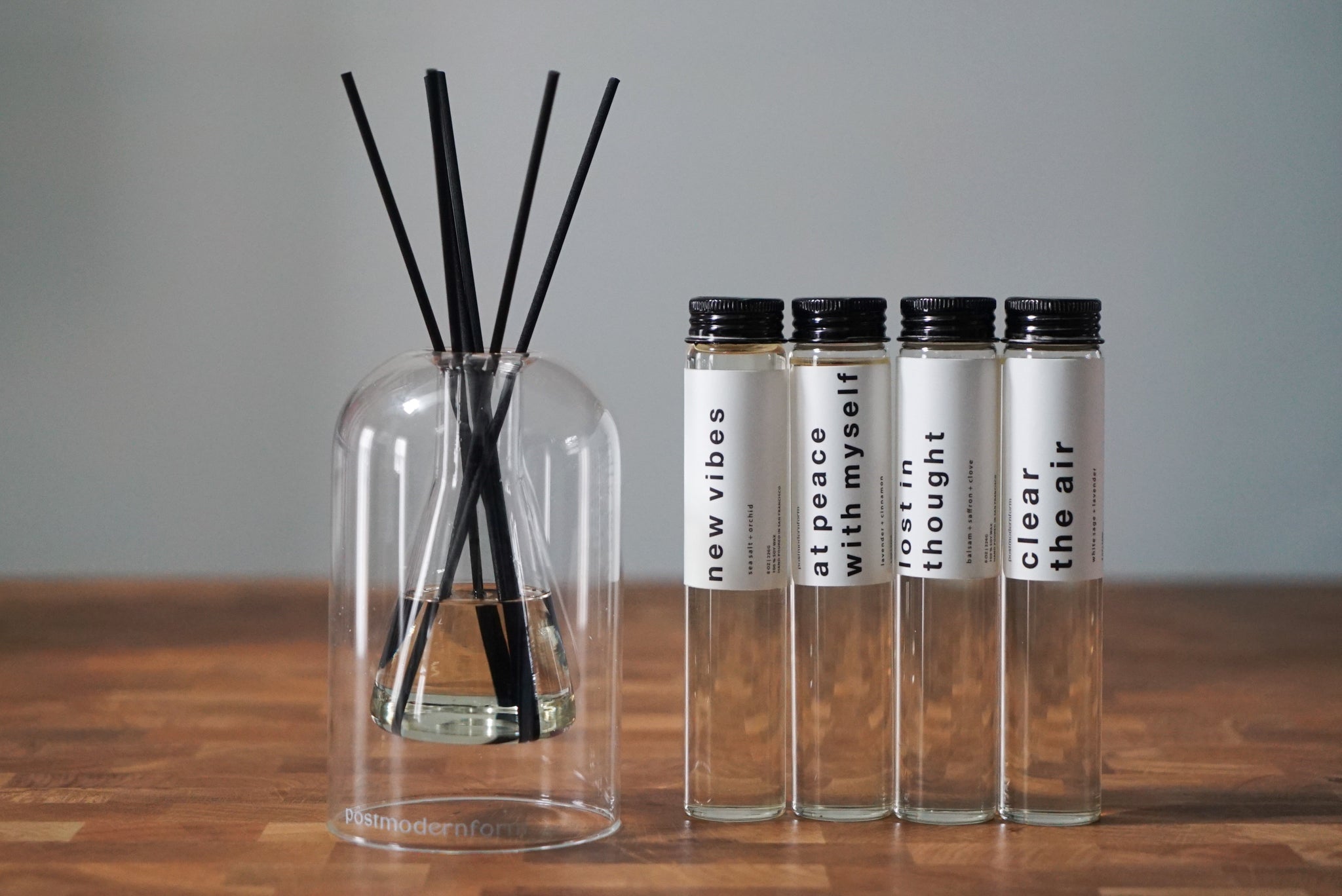
Scent can help set the tone for these routines. The Clear The Air Diffuser Set in White Sage and Lavender offers a clean, herbal blend with lavender top notes, sage and chamomile mid notes, and a sandalwood and cedar base. Use it in a room where you unwind, not in a space where you work.
When the system breaks
It will break, holidays, illness, a new baby, a move. The recovery plan is the same as the start: pick one room, do a 30-minute reset, and resume the evening routine that night. Do not attempt a whole-house reset after a lapse; it restarts the overload cycle. A calm home is not one that never gets messy. It is one where the return to calm takes an evening, not a month.
Watch out: Do not add new routines on top of old ones that are not working. If the evening reset keeps failing, shorten it to five minutes or move it to the morning, a routine you actually do beats a better routine you skip.
Booking Your First Calm-Home Upgrade at Habitat Renewal
Your calm home can start with one room and one piece. Habitat Renewal offers free shipping on orders over $100. Browse the collection, pick the piece that fits your audit, and shop Habitat Renewal's artisan decor when you are ready.
Frequently Asked Questions
How can I make my home feel calmer?
Start by removing visual clutter from surfaces and walkways, then give every item a designated place so tidying takes minutes instead of hours. Soften the lighting with lamps instead of overhead fixtures, and choose a restrained palette of two or three colors. Keep one area, such as a reading chair, reserved for rest. Make these changes gradually and notice which ones actually reduce stress in your daily routine.
What makes a home feel peaceful?
Most peaceful homes share a few traits: natural light, uncluttered surfaces, calming colors such as soft neutrals and muted greens, and comfortable textures like cotton, wool and linen. Storage that hides everyday items keeps the eye at rest. Sound and scent matter too, so a quiet corner, a diffuser with a gentle fragrance such as the Clear The Air White Sage and Lavender set can be part of the setting.
How do I create a calm home with kids?
Give children low-stakes storage at their height with clearly labeled bins, so tidying becomes a simple routine rather than a daily argument. Designate one calm zone for quiet play or reading, and keep toys in rotation so fewer items are visible at once. Set a consistent evening routine with dimmer lighting. Involve kids in choosing where things go, which builds ownership and reduces friction.
How can I make my home cozy on a budget?
Focus on low-cost changes first: decluttering is free, and rearranging furniture can change how a room feels without any purchase. Swap harsh overhead light for a warm lamp, add a throw blanket or a pair of curtains that filter light, and bring in a plant or two. Prioritize one or two durable pieces, such as a sideboard with enclosed storage, instead of buying many small items that add clutter.


